AGNTCon + MCPCon Europe 2026
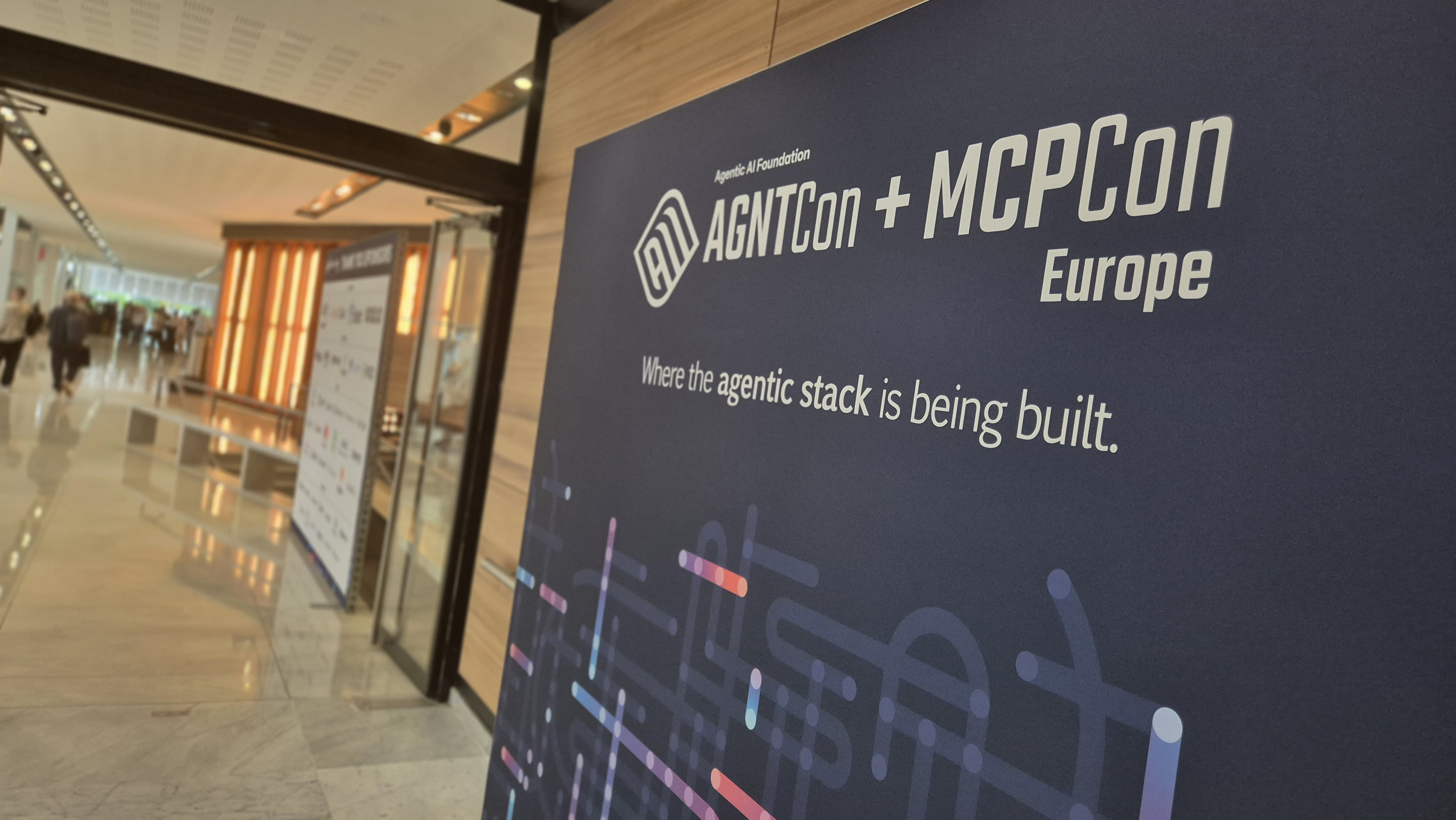
For some time I have been working hard with LangChain and studying multi-agent approaches. The conference in Amsterdam seemed like a perfect place to hear about news, ideas and challenges.
The background
The event was run by Agentic AI Foundation which works under the umbrella of Linux Foundation. This was a solid +1 for my choice (but the fact that I have never been in Amsterdam helped as well 👌). Also the speakers list was really encouraging - people behind MCP/A2A protocols and from big companies on the AI market including Anthropic, Hugging Face, Google, Microsoft and more. It looked solid.
The place
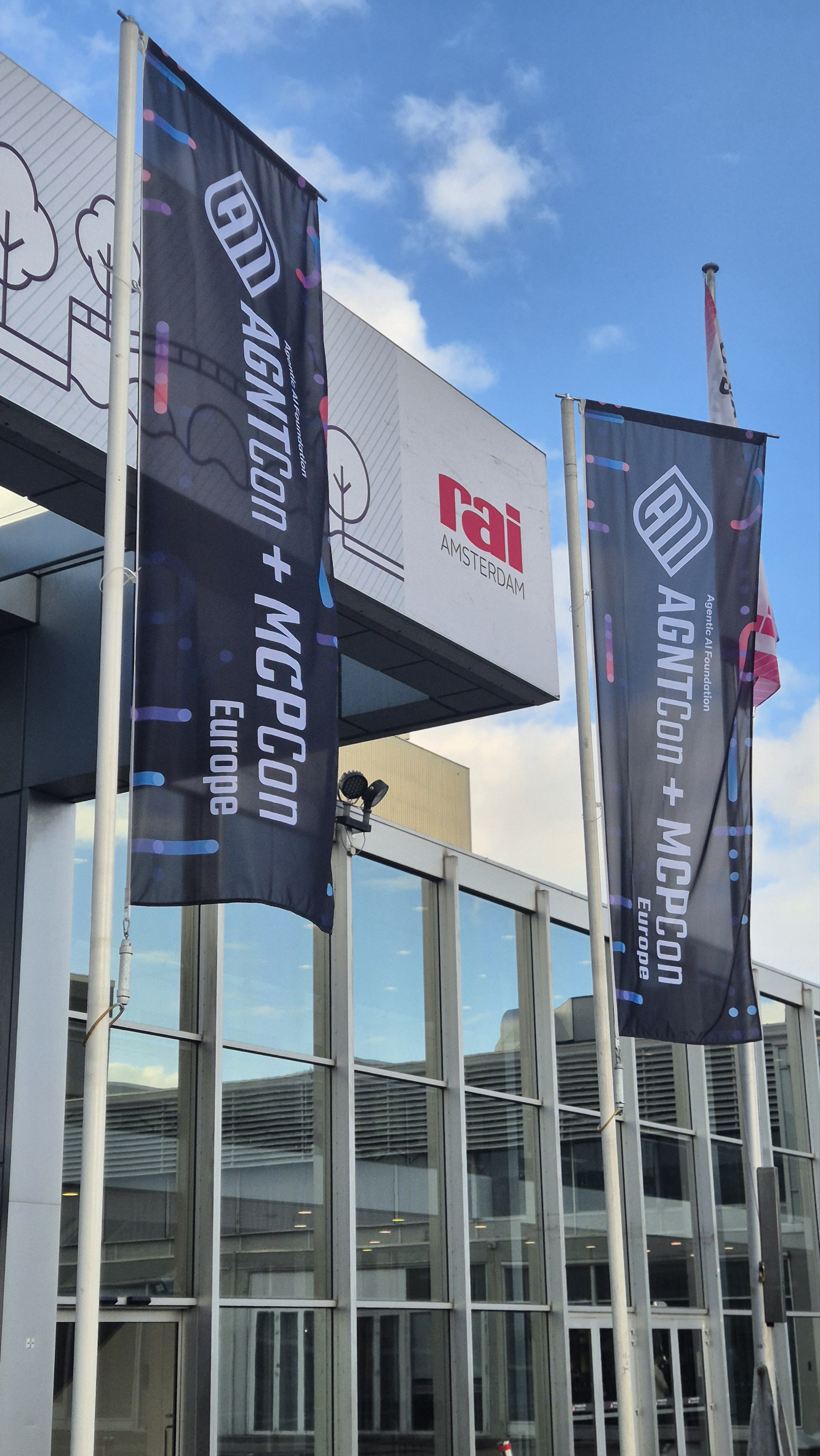
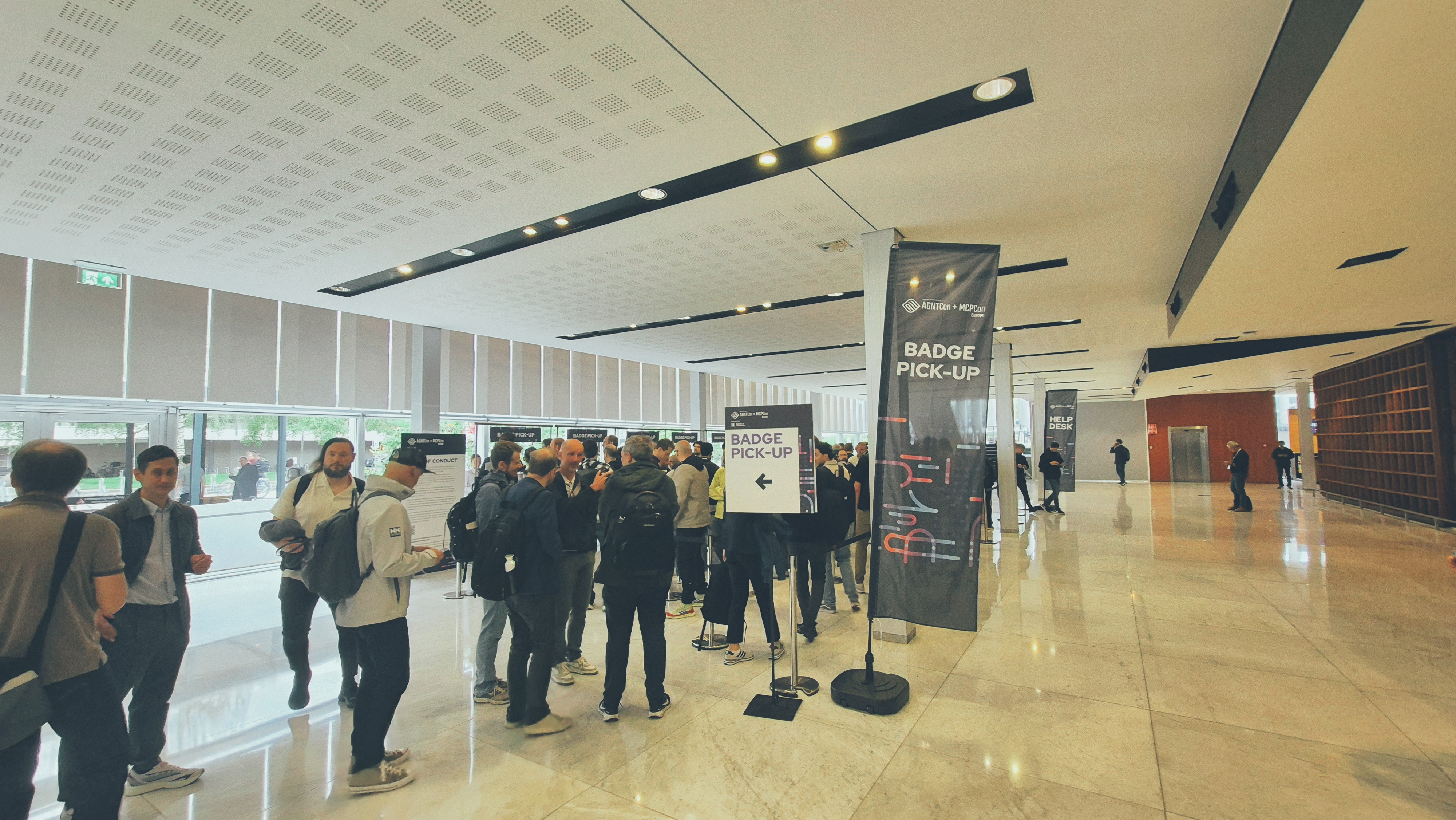
When I reached RAI space I thought - damn, that's big, not too big? I was quite early and there was no queue. What happened before 9:00 explained why such a spacious venue was needed. The conference was really crowded, which was especially evident in the area with company booths during the breaks.
The agenda
Here I can't complain - the range of topics was exactly what I was looking for, including newest additions to protocols (MCP/A2A), case studies, experiences and observations, demos, security and governance topics🍿🍿🍿
Day 1
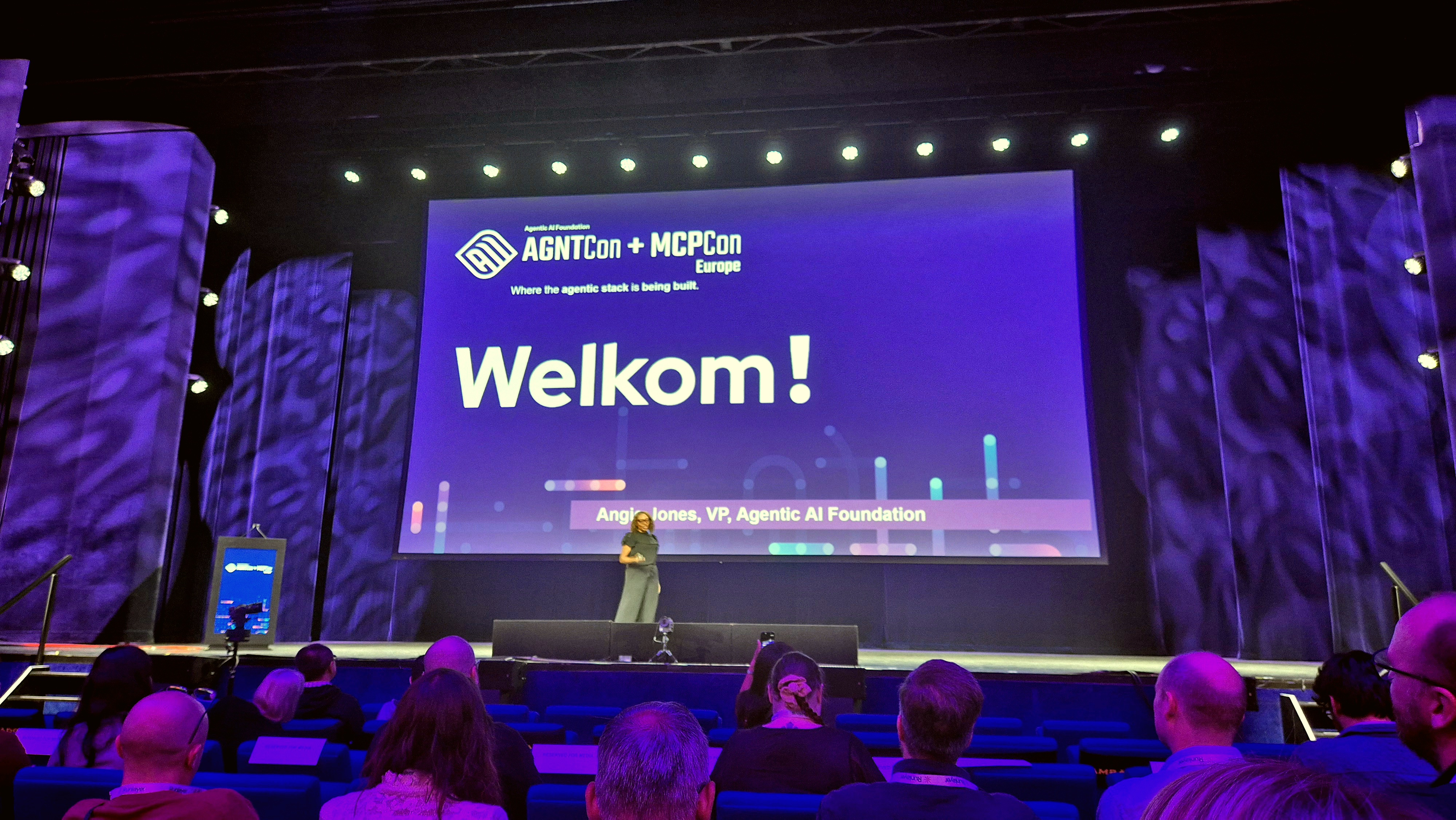
The conference was hosted by energetic Angie Jones and started with very good introduction to Agentic AI Foundation by its Executive director Mazin Gilbert. In the agentic stack AAIF as the organization is positioned above the model and currently has 270 members - which sounds like an impressive number if you compare it to its short life cycle. In the highly dynamic era of internet of agents, the goal of having open protocols and neutral governance is important and desirable.
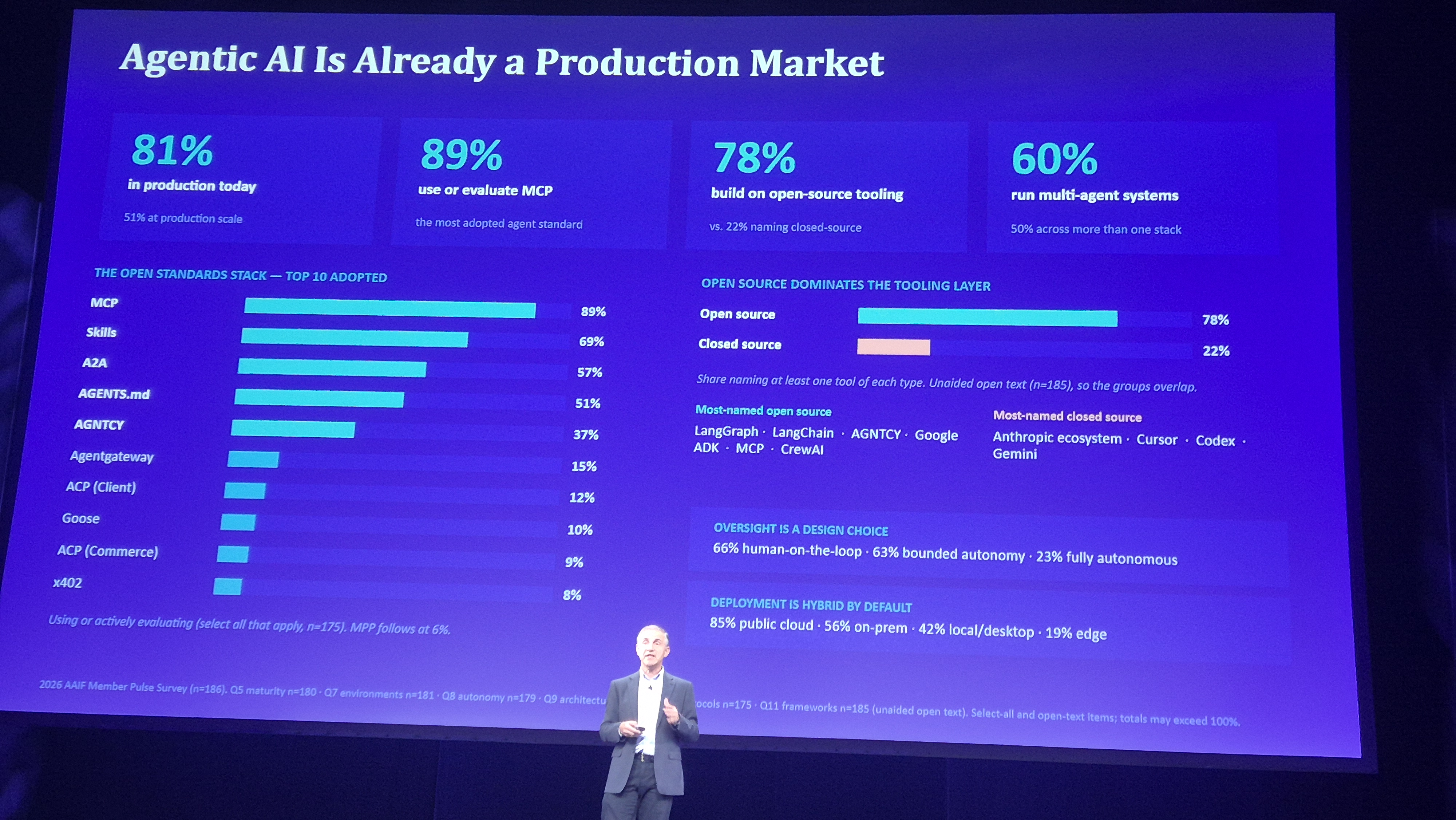
The next keynote was about MCP by one of its creators - David Soria Parra from Anthropic. We heard about the current state and the major changes introduced in the protocol with the latest version - shift to stateless processing. We were also briefly introduced to topics like MCP tasks (for async long running MCP operations) or skills over MCP. MCP semantics is getting richer and from all AAIF key projects it's one the most important, real and hard-working backbone of the current agentic interaction layer with the wild wild west of various sources (with WebMCP as well entering the stage 👋)
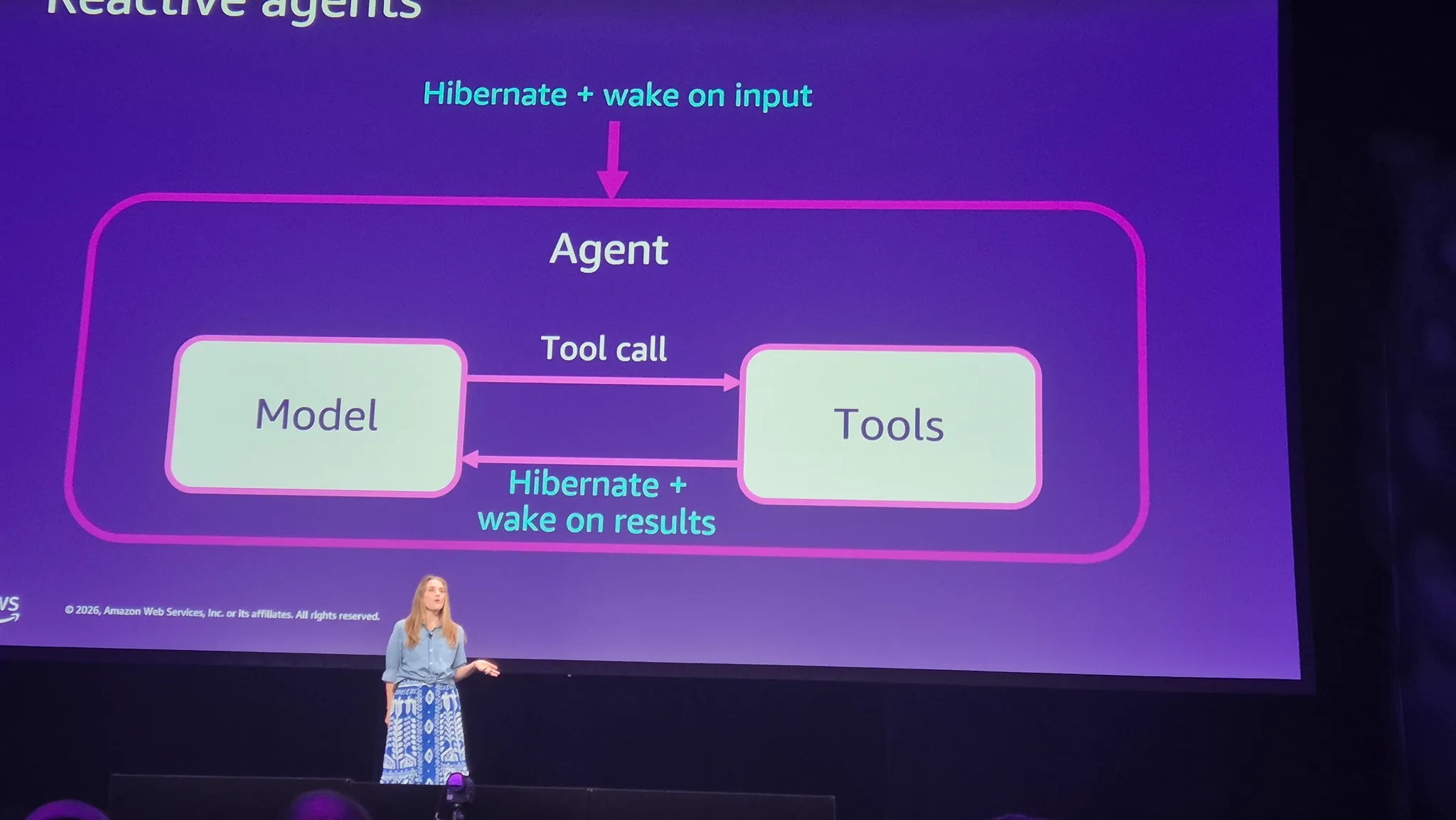
The 3rd keynote by Clare Liguori was about switching off your agents. More precisely - interactions with agents do not happen all the time and there are lots of idle time. Reactive agents can be woken up by some event and do its work. Like kind of serverless - please go rest when you are not needed, my dear agent. And latest MCP development helps with such multi round trip requests. Clare showed their example results - 80000 agents running on Raspberry Pi with 8.4GB memory.
The last keynote by Idi Levine and Keith Babo from solo.io touched the topics
of harnessed agents on shared infrastructure using agentgateway and their
agentdesktop.
After keynotes, regular sessions started in parallel, so it was sometimes not easy to pick the one. I started with Nick's Veenhof story about his personal agents stack with one orchestrator, what worked, what not and what he learned. Similar was the talk by Muhammad Ahsan Ayaz about his approach to multi-agent system with Google ADK and it was interesting to see some code samples.
The next session was my favorite from the whole conference. Jigyasa Grover and Rishabh Misra presented in a non-anti-AI way that maybe you do NOT need an agent and why autonomy is a feature, not a default. Their presentation should be mandatory for many AI cultists, who don't see the agentic approach as a trade-off.
Comparing to MCP, during the conference there were not many topics related to A2A protocol - I guess partly because it's younger than its compatriot and its maturity is currently hardening. The "A2A Goes Stable" talk was exactly about this - the switch to the first major version. Sam Betts and Kuba Herczyński, both maintainers of the protocol, introduced recent changes and their rationale. Version 0.3 was something to experiment with, v1.0 is something to commit to. They also mentioned that the adoption of 0.3 has exceeded their expectations - but this also confirms the high need for such standardized and open protocol.
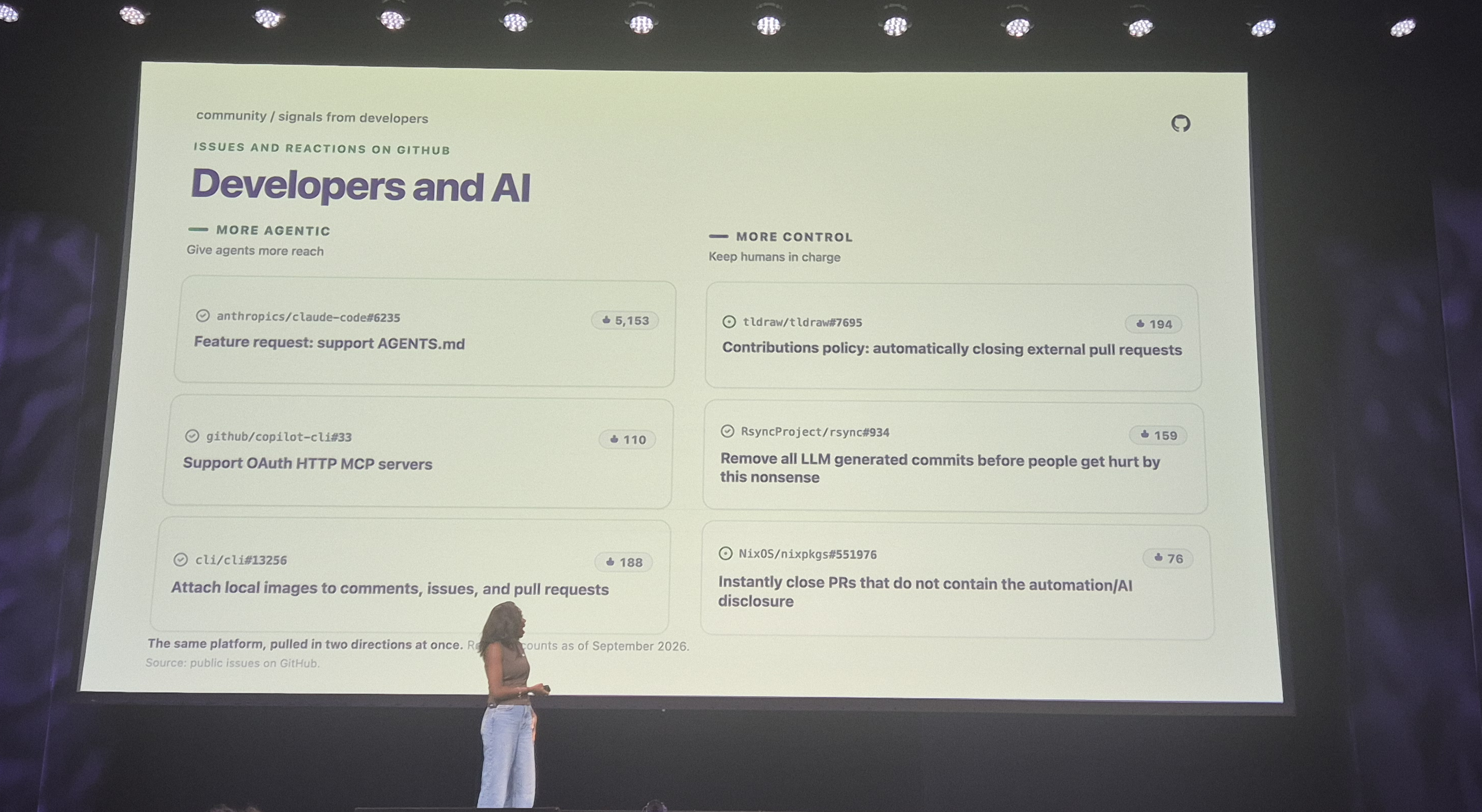
After lunch break we got another round of keynotes. Marlene Mhangami from Microsoft gave us some interesting numbers about AI usage in GitHub and how they are dealing with various demands - from more support for AI and tooling to...well, defending from AI-made PRs.
The talk by Maarten Grootendorst from Google was about developments in LLM for the agentic AIs, how the prompting is shifting towards trained behavior. Based on his examples I think this might bring a lot of improvements for A2A interactions, as the output of LLMs may be more precisely distinguished (is there an answer in the response?).
Sheng Liang from Obot AI introduced us to their open source Obot control plane and how it helps with security and governance.
The last keynote by Rachel-Lee Nabors was an interesting outlook on how AI traffic is outpacing human traffic and how WebMCP - one of the newest additions in the MCP protocol - will become "must to have" on your website. The browser is not dead, but it will be transforming.
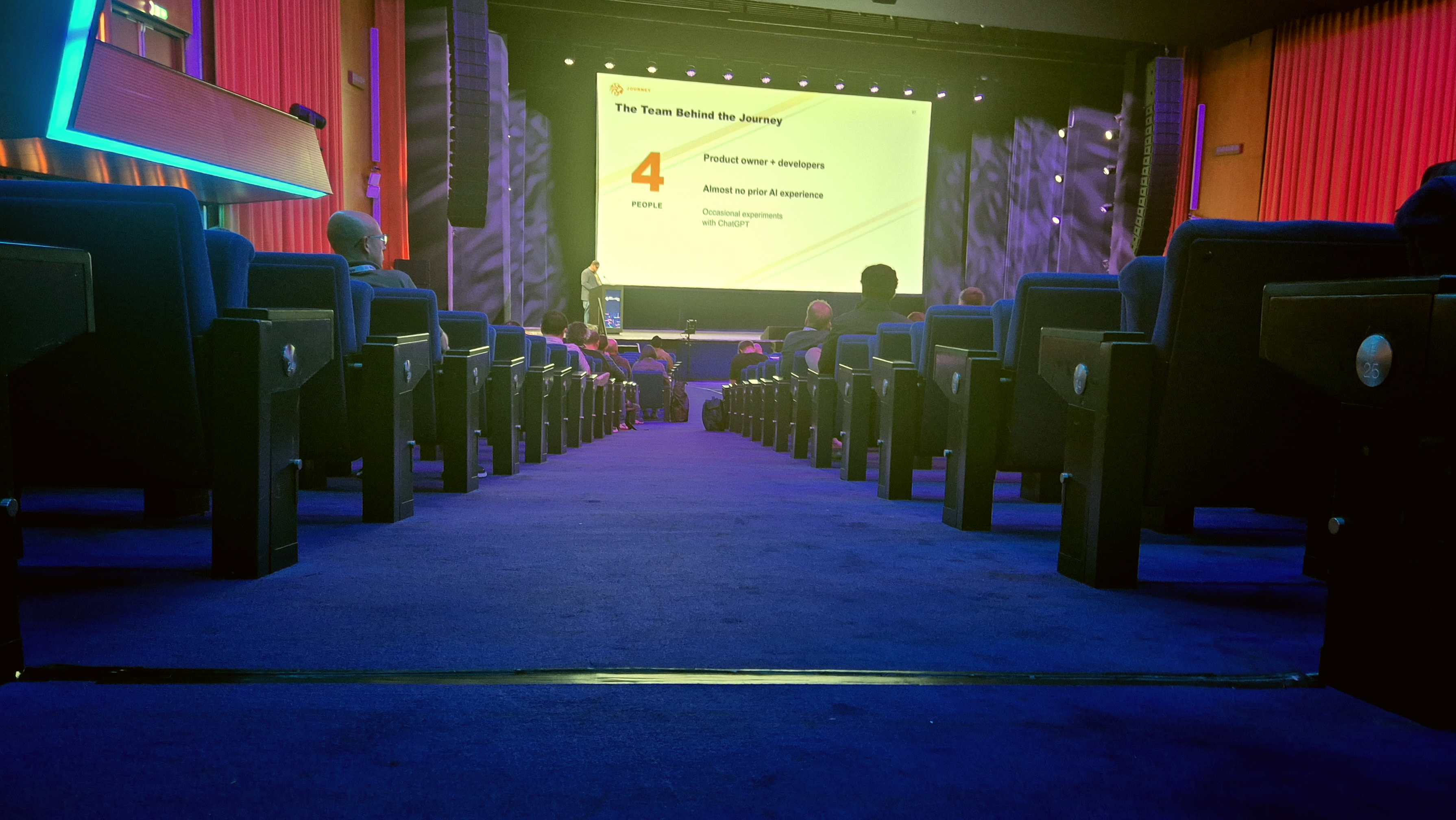
The next session I attended was a journey Thomas Schöne had with AI. This was a very honest story about transformation from initial rejection to adoption - for coding and creating solutions. His observation - AI is a professional technology that has to be learned - it is very true.
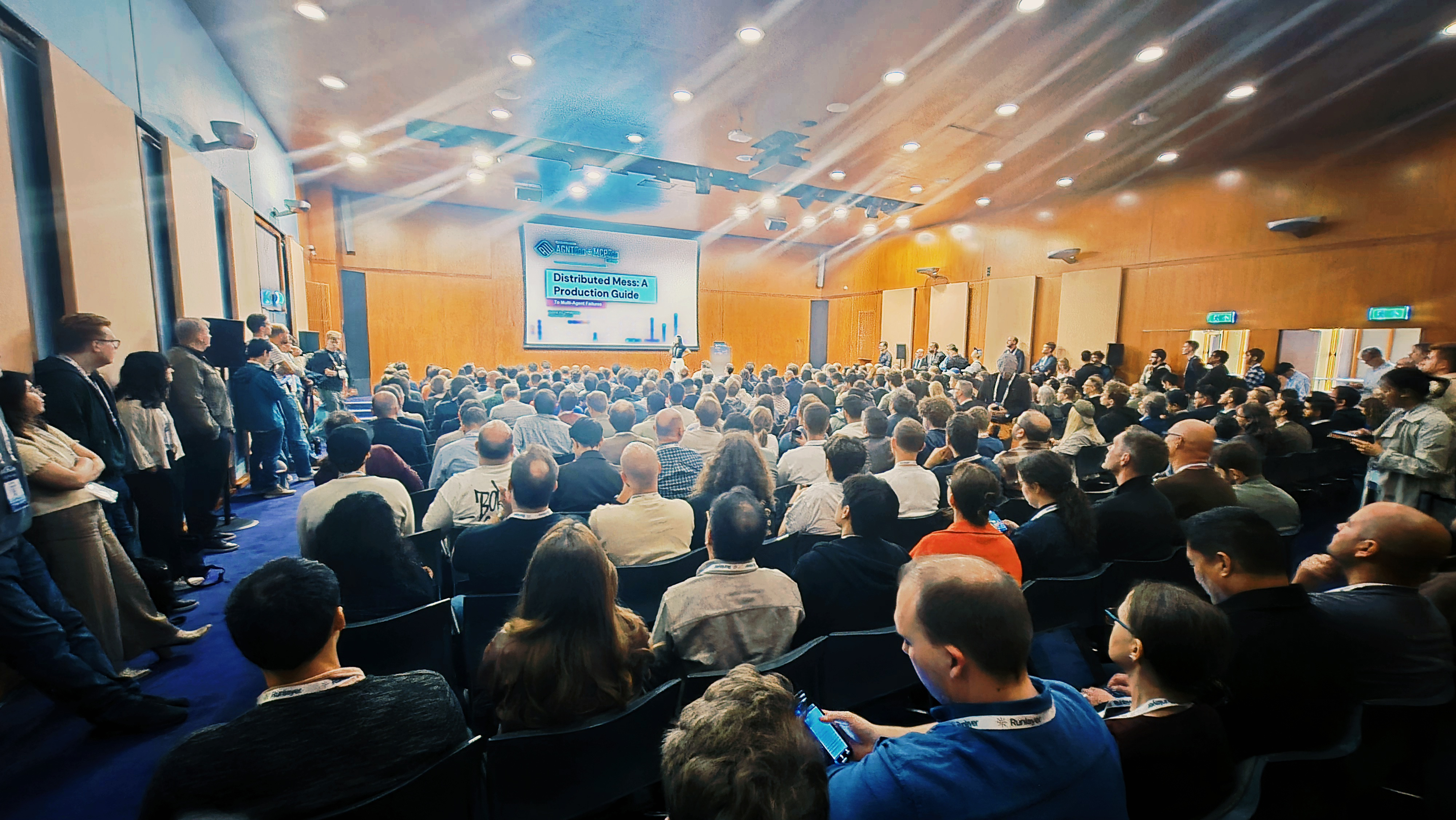
My last session was Huong Vu story about failures and "distributed mess" multi-agent system can bring. Multi-agent means also multi-failure - the blast radius of such system can be pretty big.
Day 2
Welcomed by Angie Jones on the second day, we started with keynotes. Manik Surtani, CTO of the AAIF, talked about the foundation and how they operate (comparing it to CNCF).
Shaun Smith from Hugging Face gave us the background about the biggest change in MCP - stateless transport. We also saw some numbers about the adoption rate of the recent version of the MCP protocol.
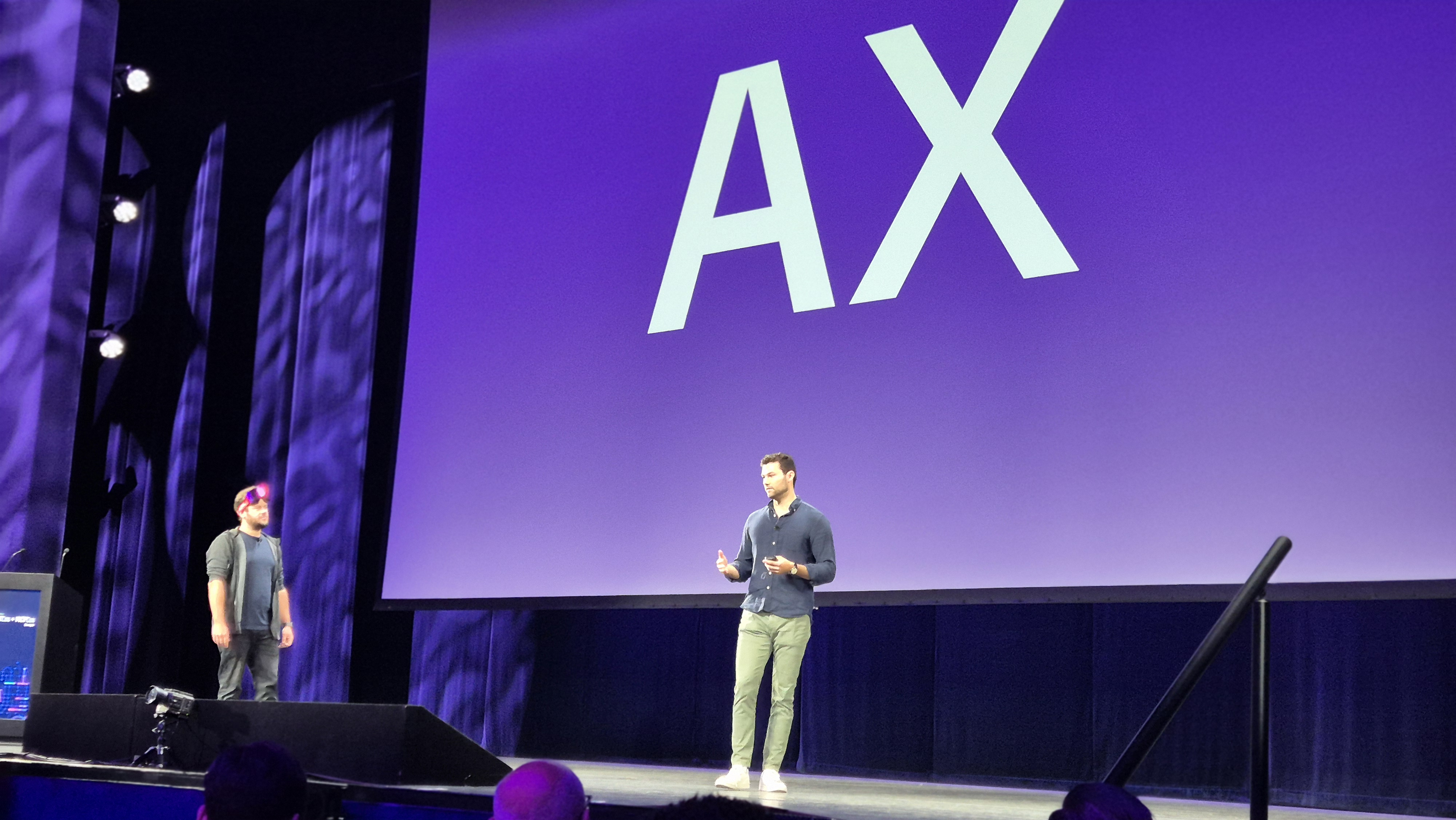
Frédéric Barthelet and Dominic Farolino showed us a quick comparison between 3 doors for agents: a MCP server, a WebMCP browser page, and a plain CLI. And since agents are now users of the web, we can talk about AX - agentic experience. Each of these doors offers a room with different set of features.
Dexter's Horthy talk was a very interesting closer look on a software development cycle with agents, which can produce code very fast, but the human review (and finding bugs) is still slow or even slower. He shared some thoughts, that unattended LLMs will NOT improve code over time (check SlopCodeBench!) and that we should still read the code.
Seshu's Tolety from Siemens presented the layered, complete approach for AI governance and that it becomes engineering capability.
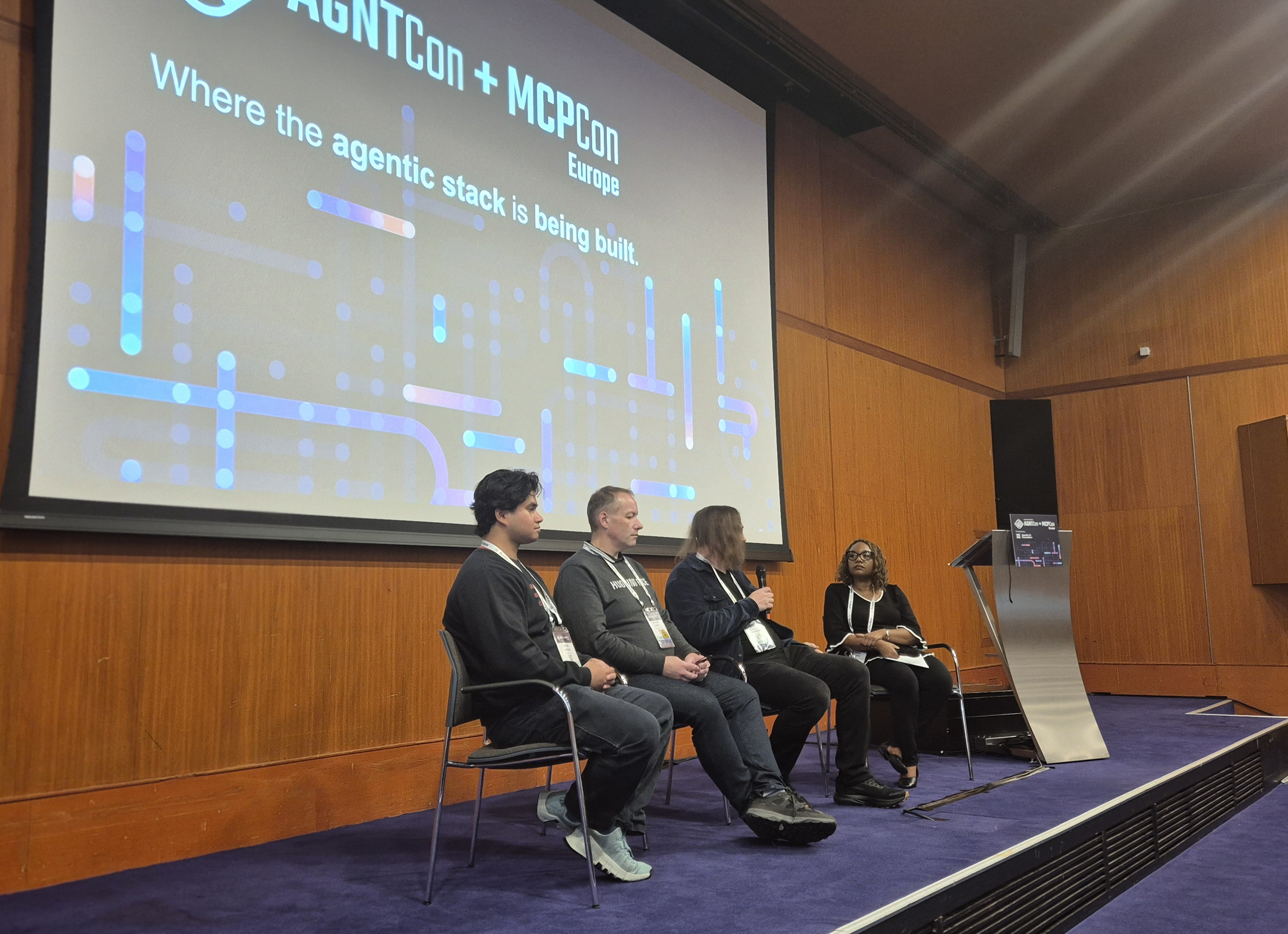
Next I went to a discussion hosted by Angie Jones between Shub Argha, Shaun Smith, and Sam Morrow about MCP challenges and opportunities. Once again the topic of becoming stateless was discussed and what was behind it (no unified concept of sessions, among others). We also heard that it is easy to upgrade and it's a good moment to take a look on your existing implementations.
Willem Berroubache gave a quite detailed presentation about their approach and experiences in a large-scale environment. It was interesting to hear what they would change if they had started today - scary to think about what can break on the road...
For my last session I picked something very close to my current lot of experiments with CopilotKit - Manfred Stayer was presenting and showing an example of generative UIs with AG-UI, A2UI and MCP Apps.
Wrap up
Agentic coding and solutions are developing fast. Really fast. And you can go with them fast. Really fast. But when you are riding fast, really fast, do not stop asking yourself if you are going in the right direction. The conference like this can help you. Rely on open standards which are getting more and more mature, take care of security and governance, carefully consider trade-offs when switching parts of the system to autonomous mode. The complexity and failure surface of such solutions may be quite big - so having a strong background in AI-related topics is mandatory. Code may be generated, your decisions may be AI-supported, but the responsibility for the solution - it's on you.


